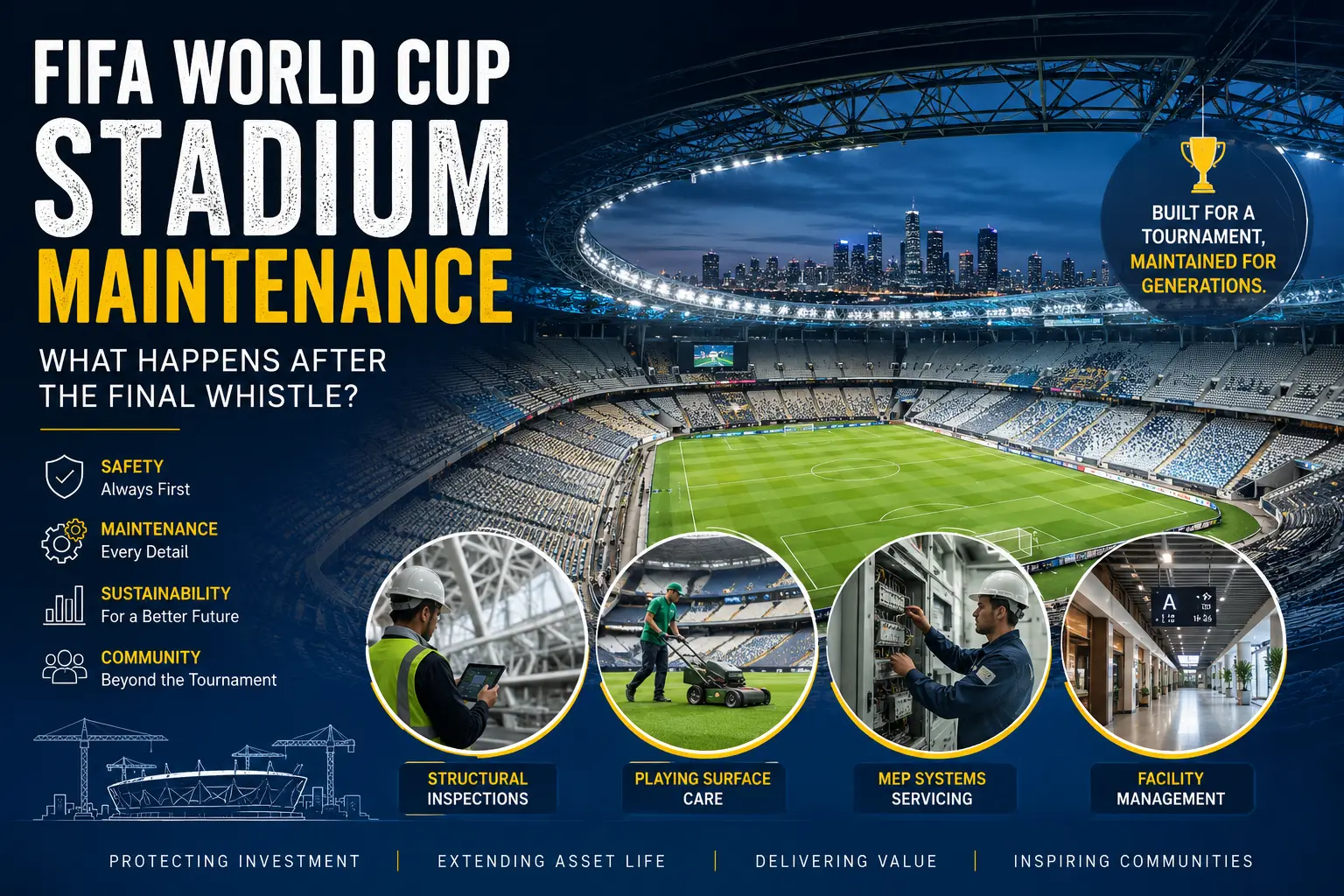
Learn how FIFA World Cup stadiums are maintained after the tournament read here in our blog FIFA World Cup Stadium Maintenance. Explore stadium facility management, structural inspections, turf maintenance, sustainability practices, and lessons for engineers.
Introduction
Every FIFA World Cup captures the attention of billions of football fans worldwide. While the excitement on the pitch lasts only a few weeks, the infrastructure developed for the tournament remains for decades. Among these investments, stadiums represent some of the most complex and expensive construction projects ever undertaken.
Modern FIFA World Cup stadiums are engineering marvels capable of accommodating tens of thousands of spectators while providing world-class facilities, safety systems, and technological innovations. However, once the final whistle blows and the tournament concludes, a critical question arises: What happens to these massive structures?
The answer lies in comprehensive stadium maintenance, facility management, asset preservation, and sustainable operations. Without proper maintenance, even the most iconic stadiums can quickly deteriorate, become financially burdensome, and fail to deliver long-term value.
This article explores how FIFA World Cup stadiums are maintained after the tournament, the challenges involved, the technologies used, and the lessons civil engineers can learn from managing these mega infrastructure assets.
Why Stadium Maintenance Matters
Constructing a FIFA World Cup stadium requires significant investment. Depending on the location, capacity, and complexity, the construction cost can range from hundreds of millions to several billion dollars.
These facilities are not built solely for a month-long tournament. Governments, investors, and sports organizations expect stadiums to remain operational and economically viable for decades.
Effective maintenance is essential for several reasons:
Ensuring Public Safety during FIFA World Cup Stadium Maintenance
Thousands of spectators gather in stadiums during sporting events, concerts, and public gatherings. Any structural failure or equipment malfunction can pose serious risks to human life. Regular inspections and preventive maintenance help identify and rectify potential hazards before they become critical.
Protecting Infrastructure Investments
Stadiums are long-term assets. Proper maintenance protects the value of these investments and minimizes costly repairs in the future.
Meeting International Standards
Many stadiums continue hosting international events after the World Cup. Maintaining FIFA standards requires continuous monitoring of facilities, seating, playing surfaces, lighting systems, and safety infrastructure.
Extending Asset Life
Routine maintenance significantly extends the service life of structures, mechanical systems, electrical installations, and building finishes.
Check out: FIFA Stadium Technical Recommendations and Requirements
FIFA World Cup Stadium Maintenance Key Activities
Maintaining a World Cup stadium involves multiple disciplines, including civil engineering, structural engineering, electrical engineering, mechanical engineering, facility management, landscaping, and information technology.
1. Structural Maintenance and Inspections
The structural system forms the backbone of any stadium. Maintenance teams conduct periodic inspections to ensure long-term stability and safety.
Concrete Structure Monitoring
Engineers inspect:
- Cracks in beams, columns, and slabs
- Water seepage
- Surface deterioration
- Concrete spalling
- Settlement issues
Non-destructive testing methods such as rebound hammer tests, ultrasonic pulse velocity tests, and ground-penetrating radar are often used to assess structural health.
Steel Structure Inspection
Many modern stadiums feature large-span steel roof systems. Maintenance activities include:
- Corrosion monitoring
- Paint coating inspections
- Weld testing
- Bolt tightening verification
- Fatigue assessment
Environmental conditions such as humidity, rain, and temperature fluctuations can accelerate steel deterioration if not properly managed.
Roof Maintenance
Stadium roofs are exposed to harsh environmental conditions throughout the year. Maintenance teams inspect:
- Waterproofing systems
- Expansion joints
- Roof cladding panels
- Drainage systems
- Structural supports
Preventive maintenance helps avoid leaks and costly repairs.
Freelancing for Civil Engineers – A Complete Guide
2. Playing Surface Maintenance
The quality of the playing surface directly impacts player performance and safety.
Turf Management
Groundskeepers perform activities such as:
- Grass cutting
- Fertilization
- Weed control
- Pest management
- Soil conditioning
Many modern stadiums use hybrid turf systems that combine natural grass with synthetic fibers to improve durability.
Irrigation Systems
Automated irrigation systems maintain optimal moisture levels throughout the year.
Maintenance includes:
- Sprinkler testing
- Pump inspections
- Water quality monitoring
- Pipe leak detection
Drainage Systems
A well-maintained drainage network prevents waterlogging and ensures matches can proceed even after heavy rainfall.
Regular cleaning and testing are essential to maintain drainage performance.
Generative Ai in Construction 2025 – Smarter Project Planning & Innovative Design [Expert Guide]
3. Mechanical, Electrical, and Plumbing (MEP) Maintenance
World Cup stadiums contain extensive MEP infrastructure.
HVAC Systems
Heating, ventilation, and air conditioning systems regulate temperature and improve spectator comfort.
Maintenance activities include:
- Air filter replacement
- Duct cleaning
- Chiller servicing
- Cooling tower inspections
- Energy performance audits
Electrical Systems
Electrical infrastructure supports:
- Stadium lighting
- Video boards
- Broadcasting equipment
- Security systems
- Emergency power supply
Routine inspections help prevent outages and equipment failures.
Fire Protection Systems
Fire safety remains a top priority.
Maintenance teams regularly inspect:
- Fire alarms
- Sprinkler systems
- Fire extinguishers
- Emergency exits
- Smoke extraction systems
Water Supply and Plumbing
Plumbing maintenance includes:
- Pipe inspections
- Pump servicing
- Water tank cleaning
- Sewage system maintenance
- Leak detection
Check out : International Facility Management Association
4. Seating and Spectator Facilities
A typical World Cup stadium accommodates between 40,000 and 80,000 spectators.
Maintaining public areas requires continuous attention.
Seat Maintenance
Maintenance activities include:
- Cleaning
- Replacement of damaged seats
- Fastener inspections
- UV damage assessment
Concourse Areas
High-traffic areas require:
- Flooring repairs
- Handrail inspections
- Escalator servicing
- Elevator maintenance
Accessibility Features
Modern stadiums must remain accessible to all users.
Maintenance includes:
- Wheelchair ramps
- Accessible seating areas
- Elevators
- Signage systems
The Role of Technology in Stadium Maintenance
Technology is transforming how stadiums are managed and maintained.
Building Information Modelling (BIM)
BIM is increasingly used during facility management operations.
Benefits include:
- Centralized asset information
- Maintenance scheduling
- Equipment tracking
- Lifecycle planning
Facility managers can quickly access information about every component within the stadium.
Digital Twins
Digital twin technology creates a virtual replica of the stadium.
This allows operators to:
- Monitor performance in real time
- Predict failures
- Optimize maintenance schedules
- Improve energy efficiency
Internet of Things (IoT)
Smart sensors continuously monitor:
- Structural movement
- Temperature
- Energy consumption
- Occupancy levels
- Water usage
These systems provide valuable data for proactive maintenance.
Drone Inspections
Drones are increasingly used for:
- Roof inspections
- Façade assessments
- Structural surveys
- Thermal imaging
Drone inspections improve safety and reduce inspection costs.
Challenges Faced After the FIFA World Cup
While stadiums are designed for long-term use, maintaining them is not always straightforward.
Underutilization
One of the biggest challenges is ensuring continuous usage.
Many countries struggle to attract enough events after the World Cup.
Underutilized stadiums often become financial liabilities because maintenance costs continue regardless of event frequency.
High Operating Costs
Stadiums require significant resources to operate.
Typical expenses include:
- Utilities
- Security personnel
- Maintenance staff
- Cleaning services
- Repairs and replacements
Large venues can incur millions of dollars in annual operating expenses.
Aging Infrastructure
As stadiums age, maintenance requirements increase.
Components eventually require:
- Major repairs
- Refurbishments
- Equipment replacement
- Structural strengthening
Lifecycle planning is essential to avoid unexpected expenditures.
Sustainability Pressures
Modern stadiums face growing expectations regarding environmental performance.
Operators must reduce:
- Energy consumption
- Water usage
- Carbon emissions
- Waste generation
Successful Examples of Post-World Cup Stadium Management
Several stadiums have successfully adapted after hosting FIFA tournaments.
Lusail Stadium, Qatar
Constructed for the FIFA World Cup 2022, Lusail Stadium was designed with post-event transformation in mind.
Parts of the facility can be repurposed for:
- Community spaces
- Educational facilities
- Commercial developments
- Recreational activities
This adaptive reuse approach helps maximize long-term value.
Soccer City Stadium, South Africa
Following the 2010 FIFA World Cup, Soccer City Stadium continued hosting:
- International football matches
- Domestic league fixtures
- Concerts
- Public events
Its diversified usage strategy supports financial sustainability.
Allianz Arena, Germany
The Allianz Arena demonstrates how continuous utilization supports effective maintenance.
Regular football matches, corporate events, and tourism activities generate revenue to fund ongoing maintenance operations.
How to Draw a Building Plan Using AI (Step-by-Step Guide 2026)
Sustainability in Modern Stadium Maintenance
Sustainability has become a major focus for stadium operators worldwide.
Renewable Energy Systems
Many stadiums incorporate:
- Solar panels
- Energy-efficient lighting
- Smart controls
These systems reduce operational costs and environmental impact.
Water Conservation
Water-saving initiatives include:
- Rainwater harvesting
- Efficient irrigation systems
- Greywater recycling
- Low-flow plumbing fixtures
Waste Management
Modern stadiums implement:
- Recycling programs
- Composting systems
- Waste segregation practices
These initiatives support sustainability goals and regulatory compliance.
Lessons for Civil Engineers
World Cup stadiums provide valuable lessons for civil engineers involved in infrastructure development.
Design for the Entire Lifecycle
Engineers should consider maintenance requirements during the design stage.
Factors include:
- Accessibility for inspections
- Durable materials
- Ease of replacement
- Future adaptability
Prioritize Asset Management
Infrastructure owners increasingly focus on lifecycle performance rather than initial construction cost alone.
Proper asset management reduces long-term expenditure and improves service quality.
Integrate Technology Early
BIM, IoT, and digital twins should be incorporated from project inception rather than added later.
Early integration improves operational efficiency and maintenance planning.
Plan for Future Use
A stadium’s success depends on its ability to remain relevant after major events.
Flexible design enables facilities to adapt to changing community needs and market demands.
The Future of Stadium Maintenance
The future of stadium management will be driven by digital innovation.
Emerging trends include:
- Artificial intelligence for predictive maintenance
- Robotic inspection systems
- Autonomous cleaning equipment
- Advanced energy management platforms
- Smart crowd monitoring technologies
These innovations will help reduce costs, improve safety, and extend asset life.
As cities continue investing in sports infrastructure, technology-enabled maintenance strategies will become increasingly important.
Conclusion for FIFA World Cup Stadium Maintenance article
FIFA World Cup stadiums are among the most complex and expensive infrastructure assets ever constructed. While the tournament itself may last only a few weeks, the responsibility of maintaining these venues extends for decades.
Successful stadium management requires a combination of structural maintenance, MEP servicing, turf management, technology integration, sustainability initiatives, and long-term asset planning. Without proper maintenance, even the most iconic stadiums can become financial burdens. However, with effective facility management and strategic planning, these venues can continue serving communities, generating revenue, and hosting world-class events long after the final whistle.
For civil engineers, project managers, quantity surveyors, and facility management professionals, FIFA World Cup stadiums provide valuable lessons in lifecycle asset management, sustainable infrastructure development, and the importance of designing with long-term operation and maintenance in mind.
Ultimately, the true success of a FIFA World Cup stadium is not measured by the matches played during the tournament but by its ability to remain safe, functional, sustainable, and economically viable for future generations.
Frequently Asked Questions (FAQs) on FIFA World Cup Stadium Maintenance
1. What happens to FIFA World Cup stadiums after the tournament ends?
After the FIFA World Cup, stadiums continue to host football matches, concerts, community events, exhibitions, and corporate functions. They are maintained through structured facility management and asset maintenance programs.
2. Why is stadium maintenance important after the FIFA World Cup?
Stadium maintenance ensures spectator safety, protects infrastructure investments, extends asset life, and helps stadiums remain operational and profitable for decades.
3. How often are FIFA World Cup stadiums inspected?
Most stadiums undergo daily operational checks, monthly maintenance inspections, annual structural assessments, and periodic comprehensive audits by engineering experts.
4. What are the major components of stadium maintenance?
Major maintenance activities include structural inspections, turf management, HVAC servicing, electrical system maintenance, plumbing repairs, fire safety inspections, and cleaning of public areas.
5. How much does it cost to maintain a World Cup stadium annually?
Annual maintenance costs vary depending on stadium size and facilities. Large stadiums may require millions of dollars annually for operations, staffing, utilities, and repairs.
6. How are stadium structures monitored for safety?
Engineers conduct visual inspections, crack monitoring, corrosion assessments, non-destructive testing, and structural health monitoring using sensors and digital technologies.
7. What is stadium asset management?
Stadium asset management involves planning, monitoring, maintaining, and replacing infrastructure components to maximize performance and minimize lifecycle costs.
8. How is the playing field maintained in FIFA stadiums?
Maintenance includes mowing, irrigation, fertilization, aeration, pest control, drainage maintenance, and periodic turf replacement when necessary.
9. What role does BIM play in stadium maintenance?
Building Information Modelling (BIM) helps facility managers track assets, schedule maintenance activities, manage equipment data, and improve operational efficiency.
10. What is a Digital Twin in stadium management?
A Digital Twin is a virtual replica of a stadium that enables real-time monitoring, predictive maintenance, performance analysis, and efficient asset management.
11. How do stadiums generate revenue after the World Cup?
Revenue is generated through football matches, concerts, corporate events, tourism, exhibitions, sponsorships, retail outlets, and hospitality services.
12. What challenges do stadiums face after hosting a FIFA World Cup?
Common challenges include underutilization, high maintenance costs, aging infrastructure, operational expenses, and sustainability requirements.
13. What is preventive maintenance in stadium operations?
Preventive maintenance involves regularly scheduled inspections and servicing to prevent equipment failures and reduce unexpected repair costs.
14. How do modern stadiums improve energy efficiency?
Modern stadiums use LED lighting, solar panels, smart energy management systems, efficient HVAC systems, and automated controls to reduce energy consumption.
15. How is water managed in FIFA World Cup stadiums?
Water management includes rainwater harvesting, efficient irrigation systems, wastewater recycling, leak detection systems, and water-efficient plumbing fixtures.
16. What technologies are used for stadium inspections?
Technologies such as drones, IoT sensors, thermal imaging cameras, laser scanning, and structural health monitoring systems are widely used.
17. Why do some World Cup stadiums become underutilized?
Some stadiums are built for major international events but lack sufficient local demand for large-scale sporting or entertainment events after the tournament.
18. What lessons can civil engineers learn from FIFA stadium maintenance?
Civil engineers can learn the importance of lifecycle planning, durable material selection, maintainability, sustainability, facility management integration, and asset management strategies.
19. How do stadium operators ensure spectator safety?
Operators conduct regular safety inspections, maintain fire protection systems, test emergency exits, inspect crowd-control infrastructure, and implement security measures.
20. What is the future of FIFA World Cup stadium maintenance?
The future includes AI-powered predictive maintenance, smart sensors, robotics, Digital Twins, sustainable infrastructure practices, and data-driven facility management systems.
Bonus FAQ
21. Which FIFA World Cup stadium is considered a benchmark for post-tournament management?
The Allianz Arena is often cited as a successful example due to its consistent utilization, modern facilities, and effective maintenance practices.
22. Can World Cup stadiums be repurposed after the tournament?
Yes. Many stadiums are redesigned for smaller capacities or converted into community, commercial, educational, or mixed-use facilities to improve long-term sustainability.
23. What is the lifespan of a modern FIFA World Cup stadium?
With proper maintenance and periodic upgrades, modern stadiums can remain operational for 50–100 years or more.
24. How does stadium maintenance contribute to sustainability?
Effective maintenance reduces waste, improves energy efficiency, conserves water, extends asset life, and lowers the overall environmental impact of the facility.
25. Are FIFA World Cup stadiums good examples of infrastructure asset management?
Yes. They are among the best examples of large-scale infrastructure asset management, requiring coordinated efforts in engineering, operations, maintenance, finance, and sustainability.
Disclaimer:
The information provided in this article is intended solely for educational, informational, and knowledge-sharing purposes. While every effort has been made to ensure the accuracy and reliability of the content, CivilInfoHub does not guarantee the completeness, accuracy, or suitability of the information presented. References to FIFA World Cup stadiums, infrastructure projects, technologies, costs, and maintenance practices are based on publicly available information and industry knowledge at the time of writing.
The views expressed in this article are for general awareness and should not be considered professional engineering, legal, financial, or technical advice. Readers are encouraged to consult qualified professionals and official sources before making any decisions based on the information provided.
CivilInfoHub is an independent civil engineering and construction information platform and is not affiliated with, endorsed by, or associated with FIFA, any World Cup organizing committee, stadium authority, or related organization. All trademarks, logos, and names mentioned belong to their respective owners.